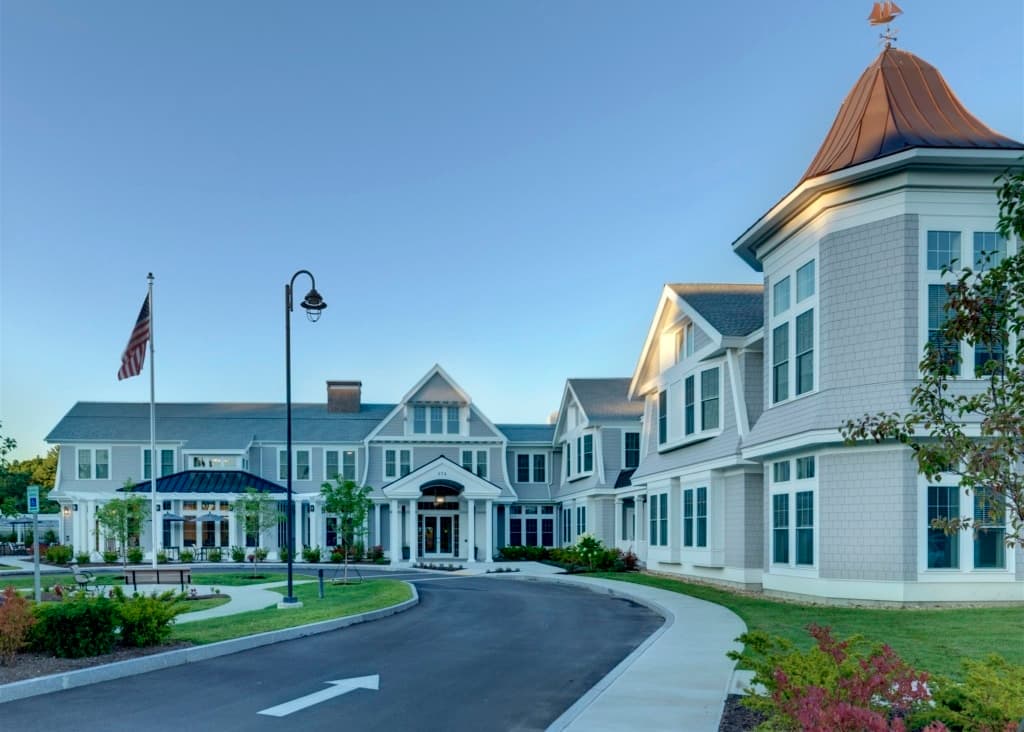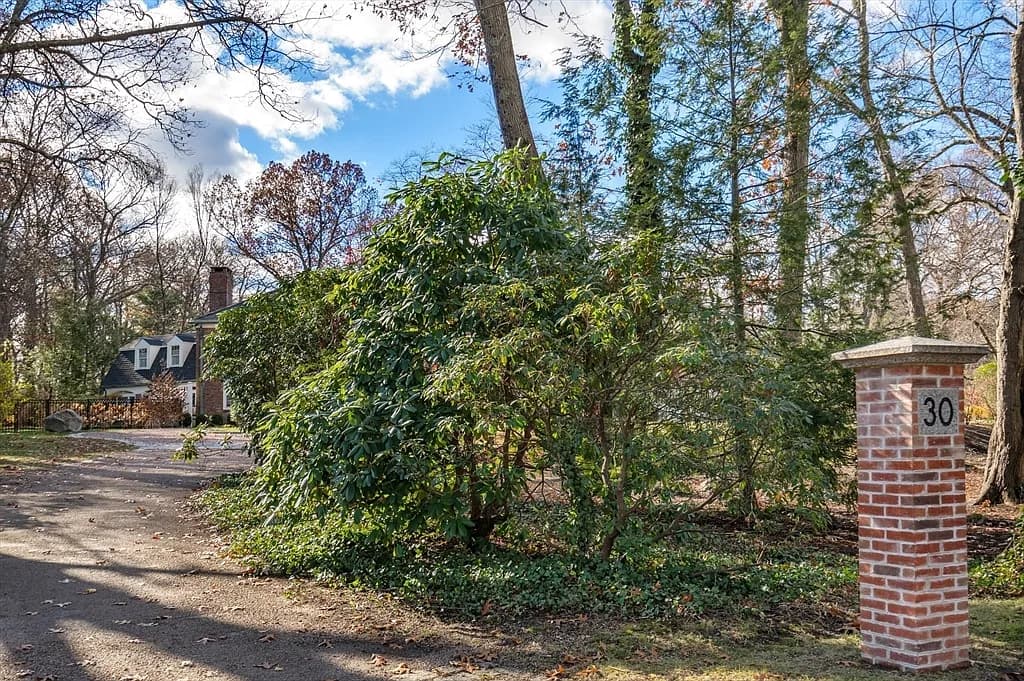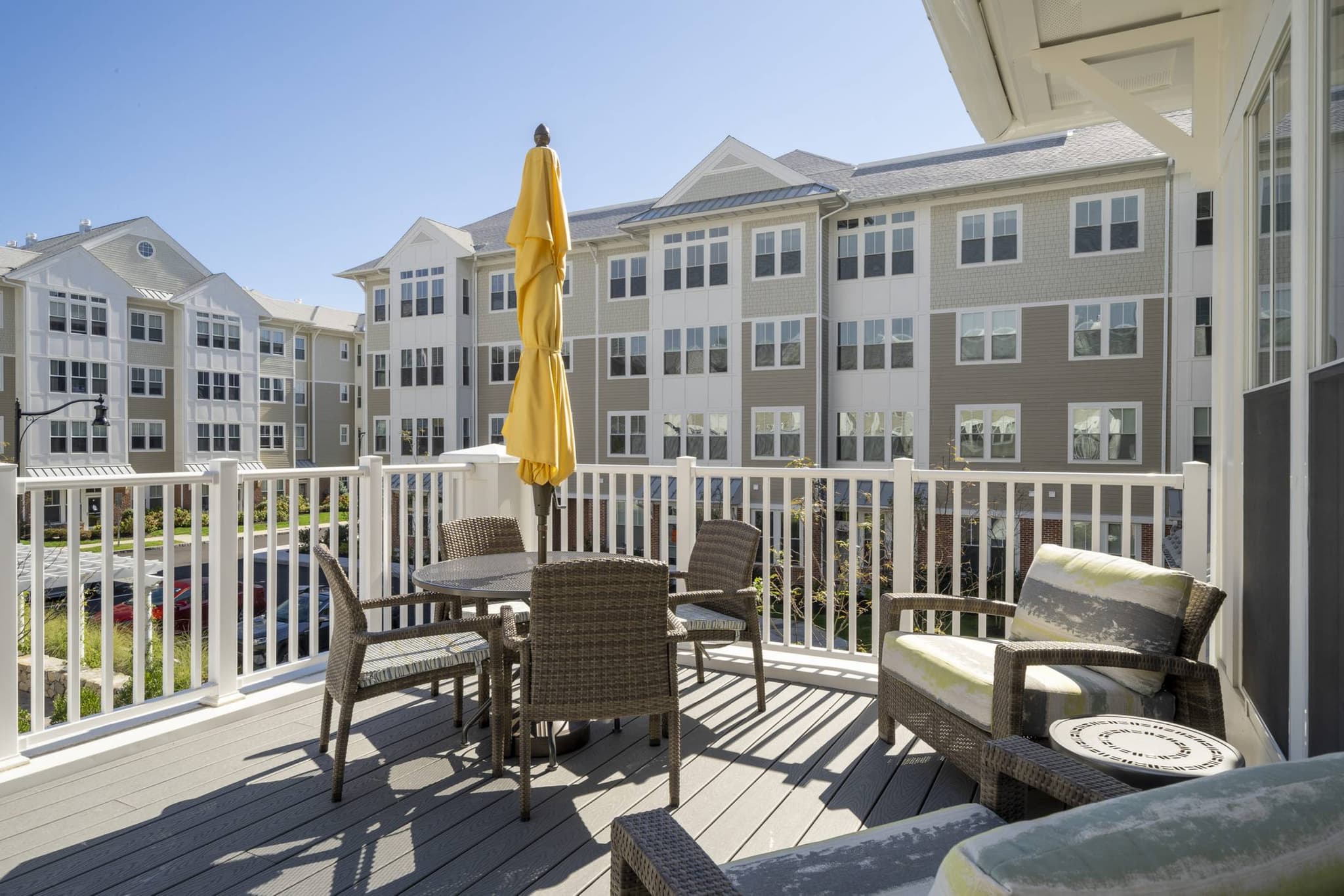
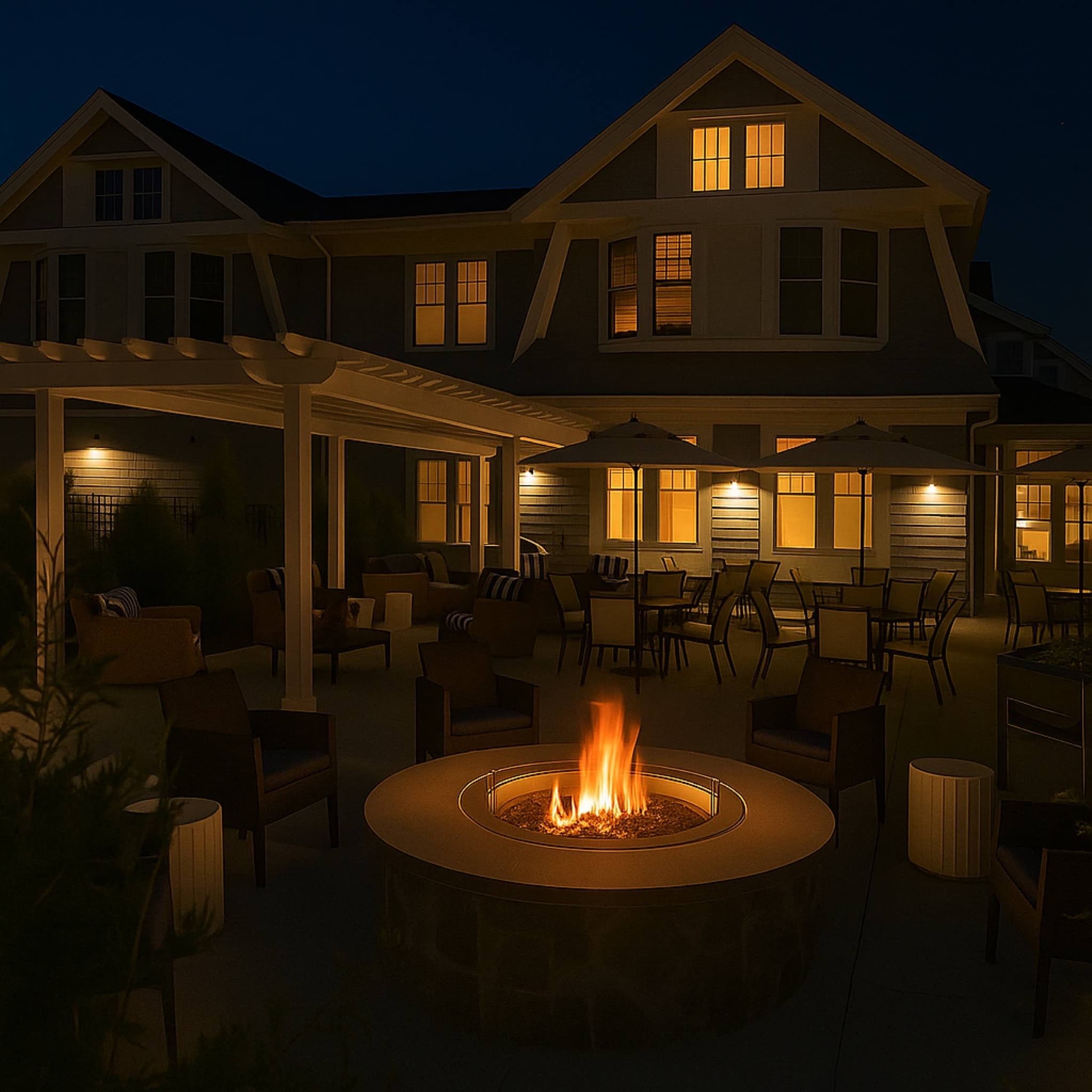
The best landscapes on the South Shore disappear at 5 p.m. for half the year. New England's early winter dusk means that without lighting, the granite steps, stone walls, and specimen trees you invested in are invisible during most of the hours you are actually home. At Hynes Landscaping, low-voltage landscape lighting is how we give a property its evenings back — designed with restraint, installed to commercial standards, and built around LED systems that sip electricity and last for decades.
Based at 118 Cushing St in Stoughton, MA, we have spent more than 25 years designing and building landscapes across 145+ towns in Massachusetts and Rhode Island. Lighting is the discipline that ties the rest together after dark: a walkway is safer, a fire terrace stays usable past sunset, a front entrance reads as finished instead of dark, and the oak you planted ten years ago becomes the centerpiece of the yard at night. Because our lighting designers work alongside our masons and planting crews, fixtures and wire go in as part of the landscape — not stapled onto it afterward.
Whether you are lighting a new Hynes-built terrace in Hingham or retrofitting an established property in Newton, our team handles design, installation, and service as one managed program. Call 781-356-3311 to schedule an evening consultation and see what your property looks like after dark — before we install a single fixture.
A Design-First Approach: Light the Effect, Not the Fixture
Bad landscape lighting is easy to spot: runway rows of path lights, glare in your eyes from the front walk, a floodlight blasting the whole facade flat. Good lighting is harder to spot — you notice the stone, the bark, the shadows, and never the source. That is the standard we design to.
Every project starts with a nighttime design conversation. We walk the property and identify what deserves light: the route from driveway to door, the grade change at the terrace steps, the paper bark maple, the stone wall whose texture only shows under a grazing beam. Then we plan fixtures around three rules — shield the source, layer the scene, and leave darkness where darkness works. A landscape lit at 20 percent of its area almost always looks better than one lit at 80.
We produce a fixture-by-fixture plan with beam spreads, wattages, and finishes, and on larger projects we demonstrate key effects on-site at night before committing. Lighting is the rare trade where you can preview the result — we use that to your advantage.
Lighting Techniques We Build With
Path & Step Lighting
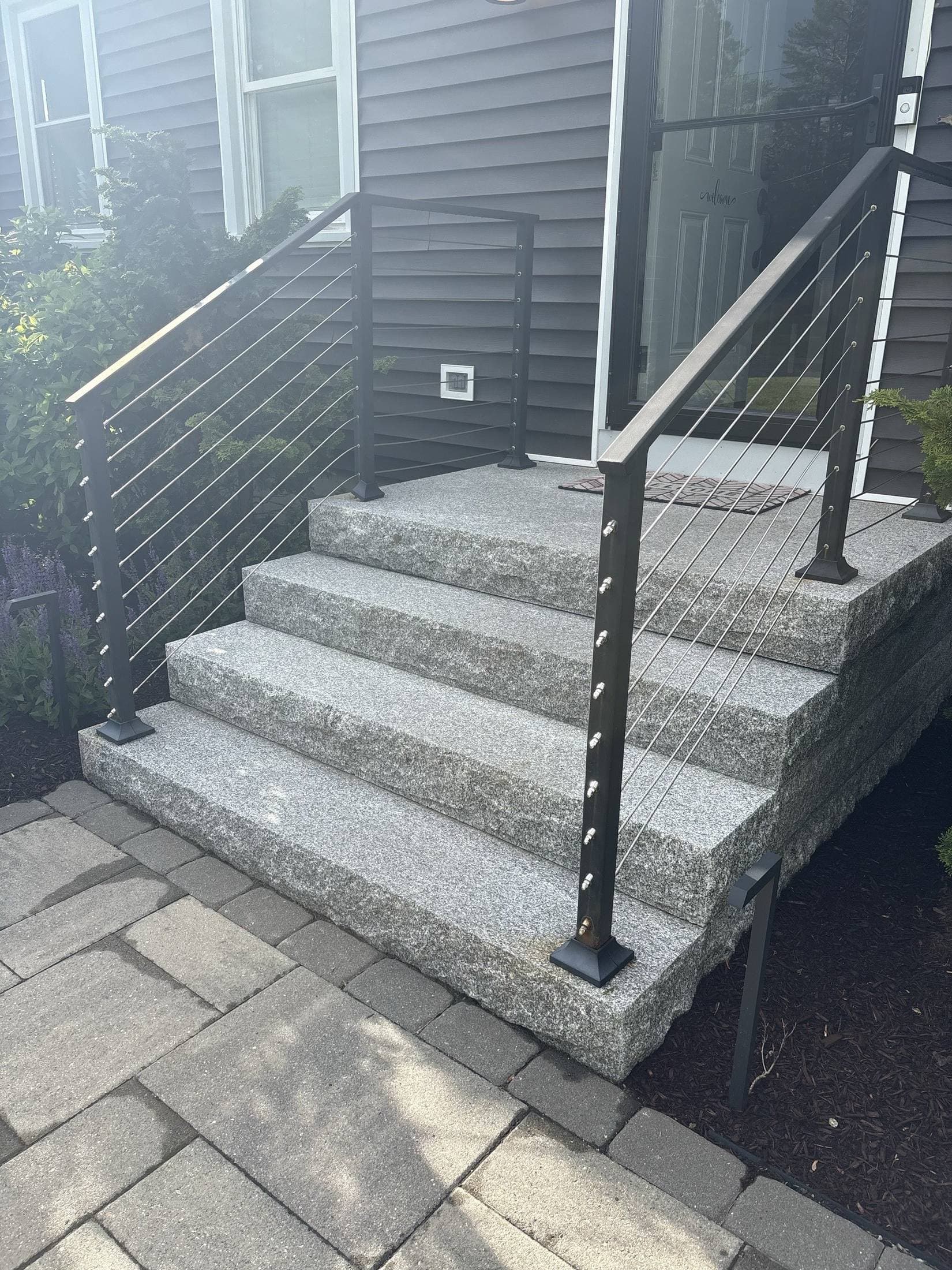
Low, shielded path lights mark walkways, borders, and grade changes without lining them like an airstrip. On stairs and stone steps — where most nighttime falls happen — we favor integrated step lights and downlight from above, so treads are lit and eyes are not. Hardscape lights built into wall caps and under bullnose treads light the surfaces people actually walk on.
Uplighting
Uplighting is how trees, stonework, and architecture become nighttime features. A pair of narrow-beam uplights turns a mature birch into sculpture; a grazing uplight rakes across a fieldstone wall or brick facade and pulls out every shadow in the texture. We aim and shield each fixture at night, because six inches of placement is the difference between drama and glare.
Downlighting & Moonlighting
Fixtures mounted high in trees or on structures, filtered through branches, cast soft pools of light that read like moonlight on a lawn or terrace. It is the most natural effect in the toolbox and our favorite way to light dining areas, play lawns, and long walkways — broad, gentle, and completely free of glare at eye level.
Safety, Security & Property Value
Lighting earns its keep in practical terms long before aesthetics enter the conversation. Well-lit walks, steps, and driveways prevent falls — a serious consideration through New England winters when guests arrive in the dark from November to March. A property with layered lighting also presents fewer hiding places and clearer sightlines than a dark one, and insurers and security professionals alike treat exterior lighting as a baseline deterrent.
There is a hospitality dividend, too. Outdoor rooms — fire features, kitchens, terraces — effectively double their usable hours with proper lighting. And because lighting showcases everything else you have invested in, it consistently ranks among the highest-perceived-value exterior upgrades when a property goes to market. Few projects change how a home lives for less disturbance: no demolition, minimal digging, and most residential installations completed in days.
Transformers, LED Systems & the Parts You Never See
Low-voltage lighting runs on 12 volts stepped down from house current by a transformer — inherently safe around kids, pets, gardens, and snow shovels. But system quality is decided by components most homeowners never look at, and this is where we refuse to cut corners.
We install professional-grade multi-tap transformers with lifetime-class stainless or brass housings, sized with headroom for future zones. Wire runs are planned and voltage-drop calculated so the last fixture on a run burns as bright as the first, with connections made in waterproof, gel-filled connectors — not the pierce-style taps that corrode and fail in three seasons. Fixtures are solid brass, copper, or marine-grade materials that shrug off coastal air from Cohasset to Duxbury and patina rather than peel.
Modern integrated LEDs draw a fraction of the power of old halogen systems and are rated for tens of thousands of hours. We spec warm color temperatures (2700K, occasionally 3000K) that flatter stone and plantings, and add astronomic timers or smart controls so the system tracks sunset year-round, zones independently, and dims for late evenings. If you have an aging halogen system, retrofitting it to LED is often the highest-return lighting project we do.
Why Choose Hynes Landscaping for Landscape Lighting?
Lighting is the last trade on most projects and the first to be blamed when it is done poorly. Our advantage is integration: the team that designed the planting plan and built the stone work is the team deciding how to light it. Conduit and wire sleeves go under walkways before pavers are set. Uplights are positioned for what a tree will look like in five years, because we planted it and know. Transformer locations, switching, and controls are coordinated with how you actually use the property.
We are fully licensed and insured, we install commercial-grade systems exclusively, and we stand behind the work with warranties on fixtures and installation. And because we are a year-round company, lighting service — seasonal aiming, fixture cleaning, re-lamping, expansion — folds into the same relationship that handles your maintenance, plantings, and snow. One team, one number: 781-356-3311.
Frequently Asked Questions About Landscape Lighting
Is low-voltage lighting safe to install around gardens and lawns?
Yes — that is its defining advantage. Low-voltage systems run at 12 volts, which is safe to touch and safe to garden around, and cable is buried at shallow depths without conduit under most conditions. The transformer that steps power down from your house current is the only line-voltage component, and we mount and wire it to code, typically at an exterior GFCI-protected circuit.
Will landscape lighting raise my electric bill?
Not meaningfully. A full LED landscape lighting system for a typical residential property draws about as much power as two or three household light bulbs. Integrated LED fixtures use 75 to 85 percent less energy than the halogen systems of a decade ago, and astronomic timers make sure the system only runs during the hours you want it.
Can you add lighting to an existing landscape without tearing it up?
Yes. Low-voltage cable installs with minimal disturbance — we hand-trench shallow runs along bed edges and slice cable under turf with almost no visible trace. The only complication is hardscape: running wire under an existing patio or walkway requires boring or lifting units, which is why we sleeve every hardscape we build. Retrofit projects across established South Shore properties are a large share of our lighting work.
How many fixtures does a typical home need?
Fewer than most people expect — and fewer than most installers sell. A restrained front-yard design might use eight to twelve fixtures; a full property with terraces, trees, and perimeter interest might use twenty-five or more. We design by effect, not by fixture count, and we build systems on transformers with capacity to grow, so you can start with the front walk and add zones over time.
See Your Property After Dark — Before You Decide
The easiest way to understand landscape lighting is to see it demonstrated on your own stone, your own trees, your own front walk. Hynes Landscaping offers evening design consultations across the South Shore, Greater Boston, and Rhode Island, and every installation comes with the same managed-program support we bring to every discipline — design, installation, and year-round service from one team.
Call 781-356-3311 or visit us at 118 Cushing St, Stoughton, MA 02072 to schedule your consultation. Explore the programs lighting works alongside: Exterior Living, Hardscape Engineering, and Landscape Architecture.